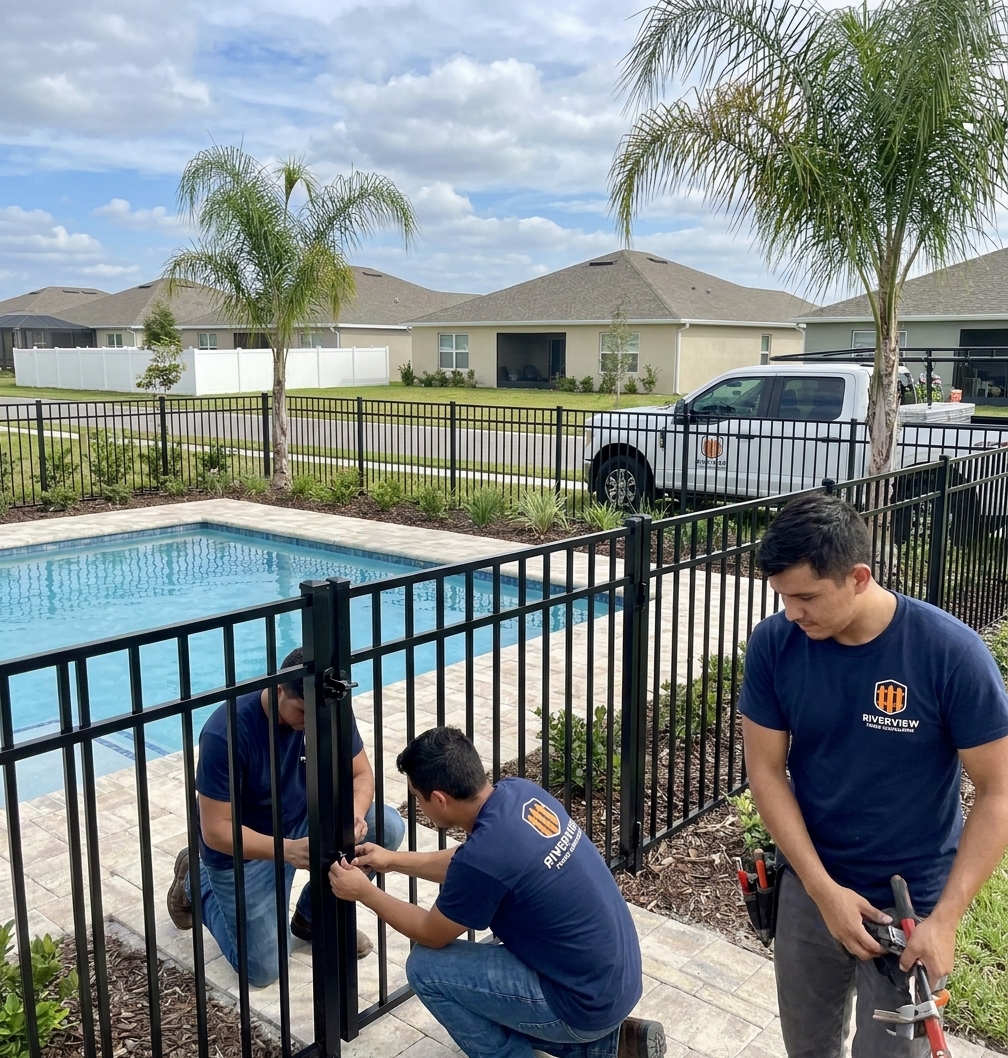
The Basic Barrier Requirement
Florida's residential pool safety standards call for a barrier at least 48 inches (4 feet) high, measured from the side away from the pool, fully enclosing the pool area and separating it from the house and yard. Any gaps or openings in the barrier generally can't exceed 4 inches — small enough that a young child can't squeeze through. This applies whether the barrier is the fence itself or a combination of fencing and the home's exterior wall.
Gates: The Detail Homeowners Miss Most
A pool barrier is only as good as its weakest gate. The general rule: any gate in the barrier needs to be self-closing and self-latching, swing away from the pool rather than toward it, and have its release mechanism mounted high enough — commonly cited around 54 inches or more above grade — that a young child can't easily reach over or through the gate to open it. We install gate hardware specifically built to meet this standard rather than repurposing a standard yard-gate latch.
Why Aluminum Is Our Top Pool Fence Recommendation
Aluminum ornamental fencing is one of the most common pool fence materials we install, for a few practical reasons:
- No footholds or handholds — vertical pickets with no horizontal rails on the pool-facing side make it harder for a child to climb
- Corrosion resistance — powder-coated aluminum holds up to pool chemicals and Florida humidity far better than untreated steel
- Open sightlines — parents and caregivers can see the pool area from inside the house, which a solid privacy fence blocks
- Low maintenance — no resealing schedule to keep up with around a pool deck
Existing Screen Enclosures & Pool Cages
Many homes across our service area already have a screened pool enclosure or lanai, and a common request is a fence section that connects to the cage with a code-compliant self-closing gate where the two meet, keeping the barrier continuous around the whole pool area rather than leaving a gap at the connection point.
Confirm the Specifics for Your Property
Pool barrier code details can vary based on your specific pool type, lot layout, and whether other elements of your property (like the house wall itself) count toward the barrier. We confirm the exact requirements that apply to your project as part of every pool fence quote and permit application — this article is a general overview, not a substitute for that property-specific review.
PAA: Florida Pool Fence Code Questions
How tall does a pool fence have to be in Florida?
Florida's residential pool barrier standard requires a barrier at least 48 inches (4 feet) high, measured on the side away from the pool, with no gaps or openings larger than 4 inches that a small child could pass through.
Does a pool gate need to self-close and self-latch?
Yes. Any gate in a pool barrier is generally required to be self-closing and self-latching, swing away from the pool, and have its release mechanism mounted high enough — commonly 54 inches or more above grade — that a young child can't easily reach it.
Is aluminum a good material for a pool fence?
Yes, aluminum ornamental fencing is one of the most common pool fence materials in our area because its vertical picket style naturally avoids handholds and footholds that could help a child climb it, and its powder-coated finish resists rust in Florida's humidity far better than untreated steel.
Get a Code-Compliant Pool Fence Quote
Whether you're fencing a new pool or bringing an existing enclosure up to code, we handle the permit application and build the barrier to meet the standard that applies to your property. Request your free estimate here or call us at (813) 803-6881.
Also see: Aluminum & Ornamental Fences and Do You Need a Permit to Build a Fence in Hillsborough County?